
Osteoarthritis and Everyday Life
Managing joint pain and staying active
A walk along the river. An afternoon in the garden. Getting up from a chair. When joints become painful or stiff, familiar parts of the day can start to take more thought. You may find yourself doing less, even when you would like to stay active.
World Arthritis Day on 12 October is a timely reminder that joint symptoms deserve attention. The day raises awareness of many forms of arthritis. Here, we focus on osteoarthritis and the practical decisions that can help you manage daily activities, understand your treatment options and get more from your care.
What helps people manage osteoarthritis
Osteoarthritis management usually combines understanding the condition, suitable exercise, practical changes to daily activities and pain management when needed. Weight management can also help where appropriate. The aim is to improve comfort and function, with a plan matched to your health and the activities you value.
What osteoarthritis means for your joints
Osteoarthritis affects the whole joint and surrounding structures, not just the cartilage. It commonly involves the knees, hips and hands. Symptoms can include pain, stiffness, swelling and reduced movement, which may make stairs, walking or gripping objects more difficult.
It is different from rheumatoid arthritis and other inflammatory forms of arthritis. New or changing joint symptoms should be assessed rather than assumed to be osteoarthritis. A clear diagnosis helps you understand which advice applies to you.
Staying active when movement feels uncomfortable
Appropriate exercise is a core part of osteoarthritis care. A physiotherapist or exercise physiologist can help choose a starting point that suits your symptoms, strength and preferences. Options may include strengthening exercises, walking, cycling or water-based activity.
For knee osteoarthritis, some discomfort during exercise does not automatically mean the joint is being damaged. Ask your treating clinician what level of discomfort is acceptable for you and how to adjust the activity if symptoms increase. A tailored plan is more useful than a blanket instruction to push through pain or stop moving.
Choose something that fits your routine. If a long walk feels daunting, ask whether shorter outings would be a suitable starting point. If you enjoy a pool, ask about an appropriate water-based program. The activity needs to work for your life as well as your joints.
Making everyday tasks more manageable
Pacing means spreading activity and rest across the day, rather than using a good morning to complete every demanding task at once. It can help you keep participating without repeatedly overdoing it. These are starting points to discuss and adapt to your circumstances:
In the garden. Choose one manageable task, take a planned break and change position before discomfort builds. Ask about tools or working heights that reduce difficult gripping or bending.
At home. Break a larger job into stages. Sit for part of meal preparation if standing is uncomfortable, or alternate a demanding task with a lighter one.
Out and about. Plan a route with somewhere to pause. Allow time for breaks rather than trying to match someone else’s pace.
If symptoms flare, use the activity-adjustment plan agreed with your clinician. Avoid assuming every change is simply arthritis. Seek prompt medical assessment for a suddenly hot, swollen joint or rapidly worsening symptoms, particularly if you feel unwell.
Can laser therapy help osteoarthritis pain
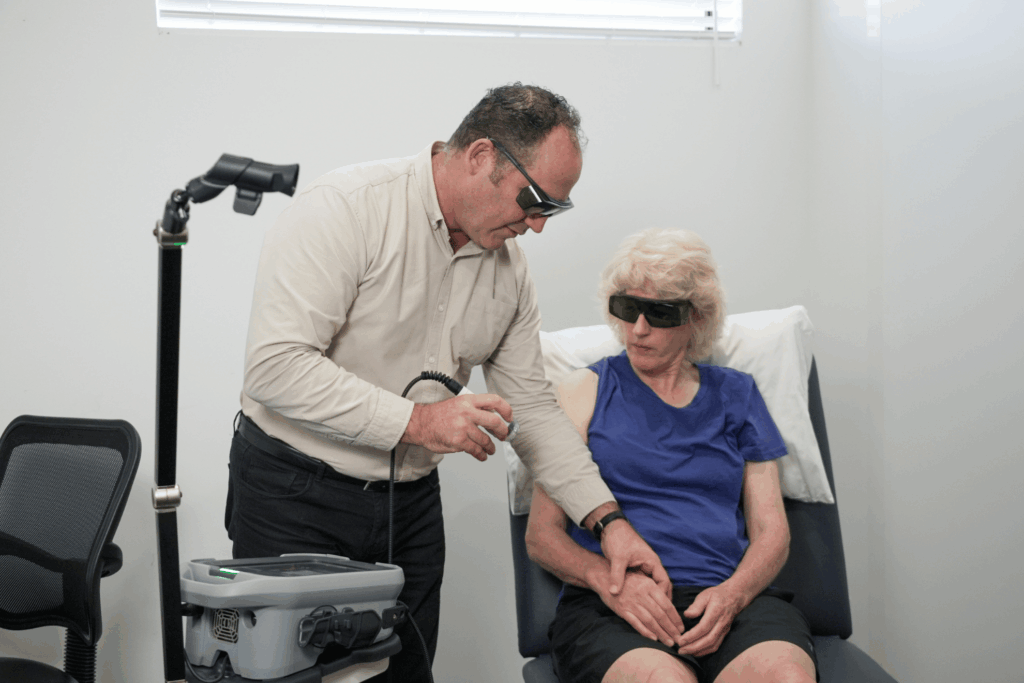
Laser therapy, also called photobiomodulation therapy or PBMT, uses light applied to the treatment area. Researchers have studied it for osteoarthritis symptoms, particularly knee pain. Some trials report benefits, but those findings do not establish that every laser device or treatment approach will produce the same result.
For example, a small randomised trial published in 2025, with 65 participants in the final analysis, found greater pain reduction with a specific low-level laser protocol than with placebo or no treatment. That is evidence about the protocol studied, not a guarantee for an individual patient or proof that laser therapy reverses osteoarthritis.
Exercise and established osteoarthritis care remain the foundation. If you are considering PBMT, ask your clinician how the evidence relates to the equipment and approach being proposed, what symptoms it is intended to address, and how you will decide whether continuing is worthwhile.
Read more about photobiomodulation therapy at CLTA
How to tell whether your care is helping
Choose an everyday activity to discuss at your review, such as using the stairs or walking to the shops. Note what you can manage, when symptoms interfere and whether you need to change the activity. Comparing the same task over time gives you and your clinician something concrete to discuss.
Before starting an additional treatment, ask: What are we aiming to change? When will we review it? What will it cost? What happens if it is not helping? A clear review point supports an informed decision about the next step.
Frequently asked questions
Do I need an X ray or scan to diagnose osteoarthritis
Not always. Typical osteoarthritis can often be diagnosed from your history and a physical examination. Your clinician may request imaging if the diagnosis is uncertain, symptoms are unusual or the results would change your care. A scan is not automatically the first step.
Does osteoarthritis mean I will need joint replacement surgery
No. Many people manage osteoarthritis without joint replacement. Surgery may be considered when symptoms substantially affect daily life and appropriate nonsurgical care has not provided enough improvement. Your doctor can help assess whether a specialist opinion is appropriate.
How many laser therapy sessions would I need
There is no single course length suitable for everyone. If treatment is considered appropriate, ask for an individual proposal covering appointment frequency, likely costs and a review point. The response to treatment should inform the next decision; a set number of sessions cannot guarantee an outcome.
Where can I enquire about laser therapy in Moama or Bendigo
Clinical Laser Therapy Australia has clinics in Moama, serving the Echuca Moama area, and Bendigo. You can contact your preferred clinic to discuss whether an assessment is appropriate. Bring details of your diagnosis, medicines and existing care to that conversation.
Discuss your options with CLTA
If osteoarthritis is affecting activities you enjoy and you would like to understand clinical laser therapy, contact our team. We can discuss the assessment process and the information to bring, so you can explore your options alongside the care you already receive.
Moama Clinic: 22 Meninya St, Moama NSW 2731
Contact: 0354 073 005
Bendigo Clinic: 176 Barnard St, Bendigo Vic 3550
Contact: 0354 425 288
Email: info@clta.com.au
General information only. This article does not replace individual medical advice.
References and further reading
Healthdirect Australia — Osteoarthritis
The Arthritis Movement — Exercise resources
Book a consulation today
Bendigo Orthopaedic and Sports Medicine Clinic
176 Barnard St, Bendigo Vic 3550